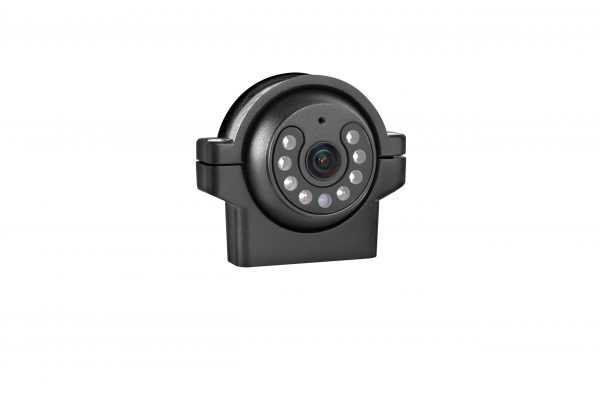
AI Wired Heavy-Duty Camera: A Comprehensive Breakdown
An AI Wired Heavy-Duty Camera is revolutionizing the way we approach industrial and commercial vehicle safety. In today’s fast-paced logistical and agricultural sectors, relying solely on human vigilance is no longer sufficient. Heavy vehicles, due to their sheer size and complex operating environments, inherently possess massive blind spots. These blind spots are a primary cause of workplace accidents and on-road collisions. By integrating artificial intelligence directly into the surveillance hardware, fleet operators can proactively prevent accidents, reduce liability, and ensure compliance with ever-tightening occupational safety regulations.
This comprehensive guide delves deep into the architecture, features, and applications of a modern AI Wired Heavy-Duty Camera. We will specifically examine the CC0501 model, a pinnacle of industrial-grade engineering designed for trucks, trailers, and agricultural machinery. From its high-definition visual output to its robust environmental shielding, we will break down exactly why this technology is indispensable for heavy-duty operations.
Table of Contents
- 1. Introduction to the AI Wired Heavy-Duty Camera
- 2. Core Technical Specifications
- 3. Deep Dive into AI Detection Mechanisms
- 4. Environmental Durability and Robustness
- 5. Visual Performance in Diverse Conditions
- 6. Installation, Wiring, and Connectivity
- 7. Key Industry Applications
- 8. Integration with Fleet Management Systems
- 9. Maintenance Guidelines for Longevity
- 10. Future Trends in Heavy-Duty Surveillance
- 11. Conclusion
1. Introduction to the AI Wired Heavy-Duty Camera
The concept of a backup camera is not new. However, the transition from passive analog cameras to an intelligent AI Wired Heavy-Duty Camera marks a paradigm shift in vehicular safety. Passive cameras simply transmit a video feed to a monitor, shifting the burden of interpretation entirely onto the driver. In a high-stress environment, a driver might easily miss a subtle movement on a small screen. This is where artificial intelligence steps in.
An AI Wired Heavy-Duty Camera actively processes the visual data in real-time. By utilizing advanced machine learning algorithms trained on thousands of images of pedestrians, cyclists, and other vehicles, the camera acts as a secondary pair of highly vigilant eyes. It doesn’t just show the driver what is behind them; it explicitly tells them if a hazard is present.
The CC0501 model serves as a prime example of this evolution. Engineered by industrial designers and electronic specialists, this unit is specifically classified as an AI Wired Heavy-Duty Camera tailored for environments that would destroy standard consumer electronics. It represents the intersection of heavy-duty mechanical engineering and cutting-edge software development.
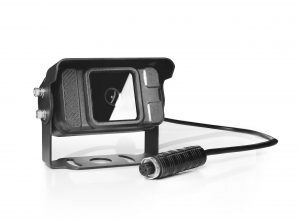
2. Core Technical Specifications
To truly understand the capability of an AI Wired Heavy-Duty Camera, one must examine its foundational specifications. The CC0501 is built around a high-performance imaging pipeline designed for clarity and reliability.
At the heart of this AI Wired Heavy-Duty Camera is a 1/2.9 inch CMOS sensor. CMOS (Complementary Metal-Oxide-Semiconductor) technology is favored in industrial applications due to its high speed, low power consumption, and excellent image quality. The sensor boasts a 2 Megapixel resolution, outputting a crisp 1920×1080 (1080p) image. This AHD (Analog High Definition) format ensures that fine details, which could be critical for safety assessments, are never lost in transmission.
The pixel size on this sensor is 2.8 µm x 2.8 µm, providing a large surface area for light capture. This is crucial for maintaining image integrity in varying lighting conditions. Furthermore, the camera operates at a smooth frame rate of either 25 fps or 30 fps, utilizing progressive scanning to eliminate the motion blur often associated with older interlaced formats.
Let’s look at a quick summary of the visual specs:
- Resolution: 1920×1080
- Megapixel: 2 MP
- Video Format: AHD 1080p
- Field of View (FOV): 120° Diagonal, 105° Horizontal, 60° Vertical
The 105° horizontal field of view is a critical specification for an AI Wired Heavy-Duty Camera. It strikes the perfect balance between covering a wide blind spot and avoiding the heavy distortion (fish-eye effect) that comes with ultra-wide lenses.
3. Deep Dive into AI Detection Mechanisms
What differentiates an AI Wired Heavy-Duty Camera from a standard heavy-duty camera is its cognitive layer. The CC0501 utilizes intelligent AI pedestrian and vehicle recognition. This system operates continuously, analyzing every frame for specific shapes and movement patterns.
The Zoning System
As visualized in the functional documentation, the AI overlays a structured warning grid onto the video feed. This grid is typically divided into three distinct zones:
- Green Zone: Indicates that a person or vehicle has been detected, but they are at a safe distance. The system registers their presence and tracks them.
- Yellow Zone: Serves as a warning zone. If an entity enters this space, the system flags it as a potential hazard, alerting the driver to exercise caution.
- Red Zone: The critical danger zone. Immediate action is required. If a pedestrian or vehicle enters this area, the AI Wired Heavy-Duty Camera triggers a severe alarm.
This tiered approach prevents alarm fatigue. If the AI Wired Heavy-Duty Camera blared a siren every time a person was 50 feet away, drivers would quickly learn to ignore it. By categorizing the threat level based on proximity, the system ensures that alarms are meaningful and command immediate attention.
Furthermore, when paired with a compatible monitor featuring audio input and external speakers, the CC0501 can execute audio-visual warnings. This is a massive leap forward in preventing backing accidents in noisy industrial yards.
4. Environmental Durability and Robustness
An AI Wired Heavy-Duty Camera designed for a climate-controlled warehouse is vastly different from one meant for a mining truck. The CC0501 is engineered for the latter. Its construction materials and environmental ratings reflect a commitment to absolute reliability.
IP69K Waterproofing
The most striking durability feature is its IP69K rating. To understand this, we can look at the standard IP Code classifications. The ‘6’ indicates complete protection against dust ingress. The ‘9K’ is a special designation for road vehicles and industrial machinery; it means the unit can withstand high-pressure, high-temperature washdowns.
Heavy trucks and agricultural equipment are routinely blasted with hot water jets to remove mud, tar, and debris. A standard IP67 camera would fail under this pressure. The AI Wired Heavy-Duty Camera with an IP69K rating survives this daily abuse without compromising the internal electronics.
Vibration and Shock Resistance
Heavy-duty vehicles generate intense, continuous vibrations. The CC0501 boasts a vibration resistance of 5.9 G and a shock resistance of 10 G. Whether traversing unpaved logging roads, working in open-pit mines, or navigating pothole-ridden city streets, this AI Wired Heavy-Duty Camera will maintain a stable connection and a clear picture.
This robustness is further supported by its material construction: a high-strength die-cast aluminum alloy housing, paired with hardened glass and stainless steel hardware. It operates flawlessly in extreme temperatures, with a working range of -30°C to +70°C and a storage range of -40°C to +80°C.
5. Visual Performance in Diverse Conditions
A safety device is only useful if it works when you need it most. Often, heavy vehicles operate at dawn, dusk, or in poorly lit facilities. The visual performance of this AI Wired Heavy-Duty Camera is engineered to overcome these challenges.
While the specifications indicate that the CC0501 does not rely on built-in IR-LEDs for night vision, it compensates with an incredibly low minimum illumination threshold of 0.01 Lux. This means the camera can capture usable images in near-total darkness, relying on ambient light from streetlamps, reverse lights, or facility floodlights.
Furthermore, the camera features an impressive Dynamic Range of 81dB, coupled with Automatic White Balance (AWB), Automatic Gain Control (AGC), and Automatic Black Level Correction (BLC). When a truck backs out of a dark warehouse into bright sunlight, standard cameras white out, blinding the driver. The advanced dynamic range of this AI Wired Heavy-Duty Camera rapidly adjusts to these contrasting light levels, ensuring continuous visibility.
6. Installation, Wiring, and Connectivity
Fleet mechanics appreciate hardware that is straightforward to install and maintain. The physical footprint of this AI Wired Heavy-Duty Camera is compact—measuring 109 mm x 76 mm x 72 mm when including the protective sun shield and bracket.
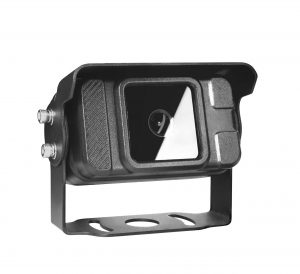
The mounting mechanism utilizes a U-shaped bracket. This design is highly practical, allowing installers to fine-tune the pitch of the camera to achieve the optimal viewing angle, regardless of whether it is mounted high on a trailer door or low on a bumper.
Connectivity is handled via a rugged 4-Pin M-Series waterproof aviation connector. Aviation connectors are the gold standard for heavy-duty wiring because they screw lock into place, preventing accidental disconnections from intense vibrations or snagged cables. The cable itself has an outer diameter of 5.0 mm and features a tensile strength of 1500N, ensuring it won’t snap if caught on debris.
Operating on a standard 12 VDC supply and pulling a mere 140mA of current (consuming max 1.7W), this AI Wired Heavy-Duty Camera is highly energy-efficient and won’t strain the vehicle’s electrical system.
7. Key Industry Applications
The versatility of an AI Wired Heavy-Duty Camera makes it an invaluable asset across multiple sectors. Its primary applications span across any environment where large vehicles share space with vulnerable pedestrians or smaller machinery.
Logistics and Freight
For articulated lorries and delivery trucks navigating congested loading docks, the AI Wired Heavy-Duty Camera serves as an essential backup aid. The AI detection system specifically helps in identifying dock workers who may step into the blind spot while the truck is reversing.
Agricultural Machinery
Tractors, combine harvesters, and sprayers operate in fields where uneven terrain and heavy dust are the norm. The IP69K rating and 5.9 G vibration resistance make the CC0501 ideal for these conditions [cite: 1]. Furthermore, farm environments often involve family members or livestock; the AI pedestrian detection is crucial for preventing tragic farming accidents.
Construction and Mining
Earthmoving equipment has notoriously large blind spots. An AI Wired Heavy-Duty Camera mounted on excavators or dump trucks can withstand the relentless shocks of the site while actively scanning for ground workers, drastically reducing the risk of crushing incidents.
8. Integration with Fleet Management Systems
Modern commercial operations rely heavily on Advanced Driver-Assistance Systems (ADAS) and telematics. While the CC0501 functions brilliantly as a standalone warning system via a direct monitor, the data generated by an AI Wired Heavy-Duty Camera is highly valuable for fleet managers.
When integrated into a broader telematics network, instances of the AI triggering a “Red Zone” alarm can be logged. This allows safety managers to identify drivers who frequently experience near-misses, facilitating targeted retraining. It transforms the AI Wired Heavy-Duty Camera from a reactive safety device into a proactive risk management tool.
Furthermore, standardizing on a single family of hardware design, as intended by the manufacturer’s unified design language, ensures aesthetic consistency across a fleet while simplifying maintenance and replacement protocols.
9. Maintenance Guidelines for Longevity
Although an AI Wired Heavy-Duty Camera like the CC0501 is built to be nearly indestructible, basic maintenance ensures peak performance over a multi-year lifespan.
- Lens Cleaning: The camera relies on visual clarity for the AI to function correctly. While the IP69K rating means it can be pressure washed, operators should ensure that mud or grease isn’t allowed to cake and dry over the hardened glass lens. A simple wipe-down with a microfiber cloth and a mild solvent prevents false negatives in AI detection.
- Cable Integrity Checks: The 4-pin aviation connector and the 50cm output cable should be inspected periodically. Installers must adhere to the minimum bending radius of 5 times the cable diameter to prevent internal wire fracturing over time.
- Mounting Hardware: The stainless steel hardware on the U-bracket should be checked for tightness during routine vehicle servicing to ensure the camera’s FOV hasn’t shifted due to heavy impacts.
10. Future Trends in Heavy-Duty Surveillance
The introduction of the AI Wired Heavy-Duty Camera is just the beginning. As edge-computing processors become more powerful and power-efficient, we can expect future iterations of these cameras to feature even more granular recognition capabilities.
Future AI Wired Heavy-Duty Camera systems might distinguish between a worker wearing a high-visibility vest and one without, or identify specific types of machinery approaching from behind. Integration with cloud-based analytics will likely become standard, allowing the camera to continuously update its recognition models via over-the-air updates, ensuring it adapts to new operational environments.
11. Deep Dive: AHD Technology in the AI Wired Heavy-Duty Camera
To fully appreciate the CC0501, we must understand the technology driving its video output. The camera utilizes AHD (Analog High Definition) 1080p formattin. Historically, heavy-duty vehicles relied on standard CVBS (Composite Video Baseband Signal) cameras. While reliable, CVBS cameras typically max out at 480i or 576i resolution. On a large monitor, this results in a blurry, pixelated image where distinguishing a shadow from a distant pedestrian is difficult.
When upgrading to an AI Wired Heavy-Duty Camera, high definition is non-negotiable because the AI algorithm requires sharp contrast and clear edges to accurately identify human shapes. AHD bridges the gap between old analog systems and modern digital IP cameras. It allows uncompressed 1080p high-definition video to be transmitted over standard coaxial cables.
This is a massive advantage for fleet upgrades. Installing a digital IP AI Wired Heavy-Duty Camera often requires completely rewiring a trailer with Ethernet cables, which are brittle and prone to snapping under heavy vibration. By utilizing AHD, the CC0501 can transmit its high-definition feed flawlessly, ensuring zero latency. In an emergency braking scenario, a split-second delay caused by digital video encoding can be catastrophic. The zero-latency transmission of an AHD AI Wired Heavy-Duty Camera ensures the driver sees the hazard the exact millisecond the AI detects it.
12. The Role of the CMOS Sensor
The foundation of the camera’s visual prowess lies in its 1/2.9 inch CMOS sensor [cite: 1]. The physical size of the sensor dictates how much light can be gathered. In the realm of industrial cameras, a 1/2.9 inch sensor is considered large and highly capable. Combined with a pixel size of 2.8 µm x 2.8 µm, the AI Wired Heavy-Duty Camera can physically absorb more photons per frame than budget alternatives.
This directly correlates to the camera’s exceptional 0.01 Lux minimum illumination. When operating a combine harvester at dusk, or backing a semi-truck into a poorly lit alleyway, the CMOS sensor minimizes visual noise (the static or grain often seen in cheap cameras at night). A clean, noise-free image is vital because visual static can confuse AI detection algorithms, leading to false positives or, worse, missed detections. Thus, the premium CMOS sensor is not just for the driver’s viewing pleasure; it is a critical requirement for the AI Wired Heavy-Duty Camera to function reliably.
13. Ergonomics and Unified Design Philosophy
Industrial design is not solely about aesthetics; it is about functional ergonomics. The documentation notes that this AI Wired Heavy-Duty Camera follows a unified family design language. This consistency benefits large-scale fleet deployments. When all safety hardware shares a common design language, maintenance teams can standardize their repair protocols and toolsets.
The integrated sun shield, clearly visible in the product diagrams, serves a dual purpose. Primarily, it blocks direct glare from overhead sunlight, which could blind the sensor and disable the AI detection. Secondarily, it acts as a physical bumper, protecting the glass lens from falling debris, low-hanging branches, or precipitation. Every curve and angle of the aluminum housing is engineered to deflect impacts and shed water quickly, ensuring the AI Wired Heavy-Duty Camera remains operational in the harshest environments.
14. The Economic Impact of Adopting AI Cameras
While the initial procurement cost of an AI Wired Heavy-Duty Camera may be higher than a passive analog camera, the return on investment (ROI) is staggering. The primary financial benefit lies in accident prevention. A single backing collision in an industrial yard can result in hundreds of thousands of dollars in equipment damage, medical liabilities, and increased insurance premiums.
Furthermore, equipment downtime is a major hidden cost. A truck that is sidelined for repairs following a minor collision is a truck that is not generating revenue. By providing drivers with an active warning system, the AI Wired Heavy-Duty Camera drastically reduces the frequency of these minor incidents. Many commercial insurance providers now offer premium discounts for fleets that proactively install AI-assisted safety systems, further accelerating the ROI of the AI Wired Heavy-Duty Camera.
15. Conclusion
The implementation of an AI Wired Heavy-Duty Camera is no longer a luxury for fleet operators; it is a critical component of modern operational safety. The CC0501 exemplifies the pinnacle of this technology, blending robust industrial design—characterized by its IP69K waterproof rating, aluminum alloy body, and 5.9G vibration resistance—with intelligent AI pedestrian and vehicle recognition.
By providing a clear 1080p AHD image, a wide 105° field of view, and a tiered audio-visual warning system, this AI Wired Heavy-Duty Camera actively mitigates the risks associated with blind spots. It empowers drivers to maneuver heavy machinery with confidence and ensures that ground personnel can work securely. As industries continue to prioritize safety and efficiency, the adoption of an AI Wired Heavy-Duty Camera will undoubtedly become a universal standard.