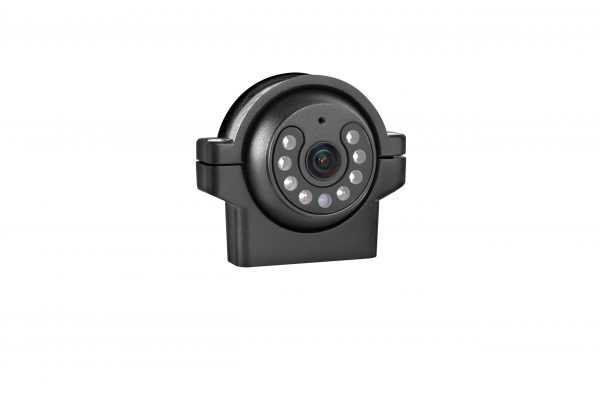
Ultimate Guide to Choosing the Best Wireless Camera System for Trucks and Trailers
Table of Contents
- 1. Introduction: Why Every Fleet Needs a Wireless Camera System for Trucks
- 2. The Engineering Challenges of Traditional Wired Trailer Systems
- 3. Core Architecture of Modern 4CH Wireless Transceivers (PW0102 & PW0202)
- 4. Deep Dive Into Technical Specifications and Performance Metrics
- 5. Step-by-Step Installation and Pairing Guide
- 6. Real-World Applications Across Industries
- 7. Key Benefits and Economic Return on Investment (ROI)
- 8. Frequently Asked Questions (FAQ)
- 9. Conclusion
1. Introduction: Why Every Fleet Needs a Wireless Camera System for Trucks
When operating large commercial vehicles, agricultural machinery, or heavy-duty articulated trailers, maintaining complete 360-degree visibility is paramount. Drivers face numerous blind spots, tight maneuvering spaces, and unpredictable road hazards. For decades, traditional wired camera configurations were the default standard, yet they came with severe limitations in installation complexity, maintenance overhead, and vulnerability at articulation points.
Today, adopting a high-performance wireless camera system for trucks completely revolutionizes commercial vehicle safety. By eliminating clumsy umbilical cables between the truck cab and the towed trailer, modern digital wireless transmission sets—such as the TVH PW0102 and PW0202 4CH AHD system—deliver pristine high-definition video feeds without signal degradation or electromagnetic interference. Whether you manage long-haul freight trucks, agricultural tractors, or heavy construction trailers, upgrading to a robust wireless vision architecture ensures maximum driver confidence and accident prevention.


2. The Engineering Challenges of Traditional Wired Trailer Systems
To fully appreciate the transformative value of a reliable wireless camera system for trucks, one must examine the inherent flaws of conventional wired setups. Traditional setups require long physical extension cables running from rear-mounted trailer cameras all the way to the dashboard monitor.
In articulated vehicles, the connection interface between the tractor unit and the trailer undergoes constant mechanical flexing, vibration, and environmental exposure. Over time, connector pins corrode, cables suffer from pinching or insulation cracking, and intermittent signal loss occurs. Furthermore, retrofitting wired cameras across diverse mixed fleets requires drilling complex holes, routing shielded cables through chassis frames, and spending countless hours in maintenance bays. These friction points heavily drive up operational downtime and fleet management expenses.
3. Core Architecture of Modern 4CH Wireless Transceivers (PW0102 & PW0202)
Modern wireless video technology bridges these gaps through advanced RF engineering. The industry-leading TVH wireless transmission package consists of two primary hardware components: the PW0102 Wireless Sender Box (installed on the trailer or rear body) and the PW0202 Wireless Receiver Box (mounted near the cab monitor).
The sender unit features four dedicated 4-pin waterproof aviation input channels (CH1 through CH4), allowing technicians to seamlessly connect up to four separate analog high-definition (AHD) or standard definition (SD) cameras. Powered by a standard 10–32V DC automotive electrical system, the transmitter encodes incoming video streams using high-efficiency H.264 video compression and transmits them over a secure 2.4 GHz digital frequency hopping spread spectrum (FHSS) band.
4. Deep Dive Into Technical Specifications and Performance Metrics
Evaluating any commercial-grade wireless camera system for trucks requires scrutinizing rigorous performance parameters. The TVH PW0102 and PW0202 transceivers boast exceptional specifications engineered for grueling industrial environments.
| Technical Parameter | Specification Detail |
|---|---|
| Operating Voltage | 10 – 32 VDC (Automotive Grade with Fuse Protection) |
| Supported Resolution | AHD 1080p, AHD 720p, CVBS (PAL / NTSC) |
| Frequency Range | 2403 MHz – 2478 MHz (FHSS Modulation) |
| Maximum Transmission Range | Up to 300 meters (Barrier-free under FCC regulations) |
| Video Compression / Delay | H.264 codec, Maximum transmission delay ≤ 200 ms |
| RF Bit Rate & Sensitivity | Max. 12 Mbps, Receiving Sensitivity -78 dBm |
| Environmental Protection | IP69K Waterproof, 5G Vibration Resistant, 7G Shock Resistant |
| Operating Temperature | -20°C to +70°C (-4°F to 158°F) |
As detailed in the technical datasheet, the system ensures zero interference through encrypted digital transmission pairing. For further industry standards on automotive electronics, you can reference resources like SAE International.
5. Step-by-Step Installation and Pairing Guide
Deploying a professional wireless camera system for trucks is remarkably straightforward, significantly reducing installation labor hours compared to traditional wired harnesses.
- Mounting the Hardware: Secure the PW0102 sender box to the trailer body using the included M4 stainless steel mounting screws, ensuring the unit is positioned where power is accessible and unshielded by dense metal bulkheads.
- Connecting Cameras: Plug up to four camera harnesses into the 4-pin waterproof aviation connectors (CH1–CH4). Connect the red power wire to the 10–32V DC supply and the black wire to the vehicle chassis ground (GND).
- Receiver Setup: Mount the PW0202 receiver box near the cab monitor and connect its output cable directly to the monitor’s video input channel.
- System Pairing: Power on both units. Press the PAIR button on the receiver until its LED starts flashing, then press the PAIR button on the sender within 60 seconds. Solid indicator lights confirm successful pairing.
6. Real-World Applications Across Industries
The versatility of a high-performance wireless camera system for trucks makes it indispensable across multiple heavy-duty commercial sectors:
- Freight and Logistics: Semi-trucks and long-haul articulated trailers benefit from wireless rear and side-view monitoring without breaking connections during coupling and uncoupling maneuvers.
- Agricultural Machinery: Tractors pulling large grain carts or harvesters require reliable wireless visibility over wide operational fields where physical cabling would snag or tangle.
- Recreational Vehicles & Utility Trailers: Towing campers, horse trailers, or flatbed construction haulers becomes dramatically safer, allowing drivers to monitor blind spots instantly.
7. Key Benefits and Economic Return on Investment (ROI)
Investing in an advanced wireless camera system for trucks delivers immediate financial and operational returns. Fleets experience reduced collision repair costs, minimized insurance premiums, and near-zero downtime related to cable failure. Furthermore, the intuitive multi-channel switching allows drivers to cycle through camera views instantly via integrated front-panel buttons or automated trigger wires linked to reverse gears and turn signals.
8. Frequently Asked Questions (FAQ)
Can the wireless signal be interrupted by obstacles or weather?
The system utilizes advanced Frequency Hopping Spread Spectrum (FHSS) modulation in the 2.4 GHz band, providing robust resistance against multi-path interference and maintaining stable connections up to 300 meters in open spaces.
How many cameras can I connect to a single receiver?
Each transceiver set supports up to 4 independent video channels (CH1 to CH4), enabling comprehensive multi-angle coverage from a single sender box.
9. Conclusion
In summary, integrating a premium wireless camera system for trucks is the definitive upgrade for any modern commercial fleet seeking uncompromised safety, durability, and ease of installation. By replacing fragile umbilical cables with reliable 1080p digital wireless transmission, operators can safeguard their drivers, cargo, and investments on every journey.